
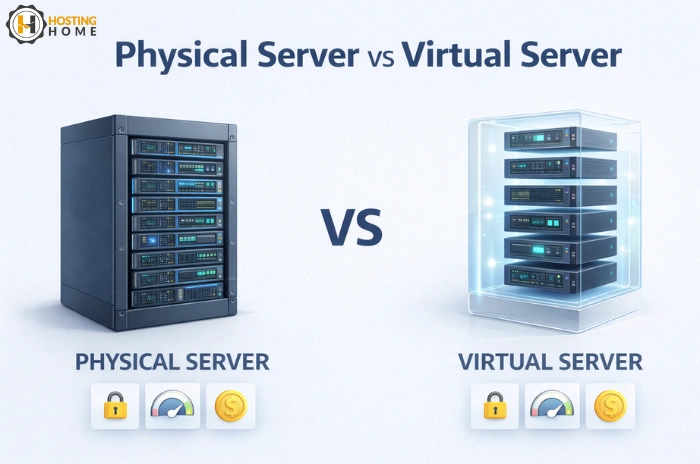
In these modern digital world, businesses need strong and secure servers to operate websites, applications, and databases. When choosing hosting many people get confused about physical and virtual servers. It helps you decide on the right solution for your needs when you understand physical server vs virtual server difference.
Both kinds of servers have their advantages and applications. This blog explains the basic comparison in simple words, so you can make the right decision for your business.
What Does a Physical Server Mean?
Many new uses ask the question what is a physical server? Simply, physical server means a real machine with hardware such as CPU, RAM, hard disk, network card etc. It is installed in a data center and is used by only one customer.
A bare metal physical server has complete access to all the hardware resources. No other user has access to the system.
A physical web server is often used for large websites, ERP systems and heavy applications that need high speed and uptime.
What Is a Virtual Server?
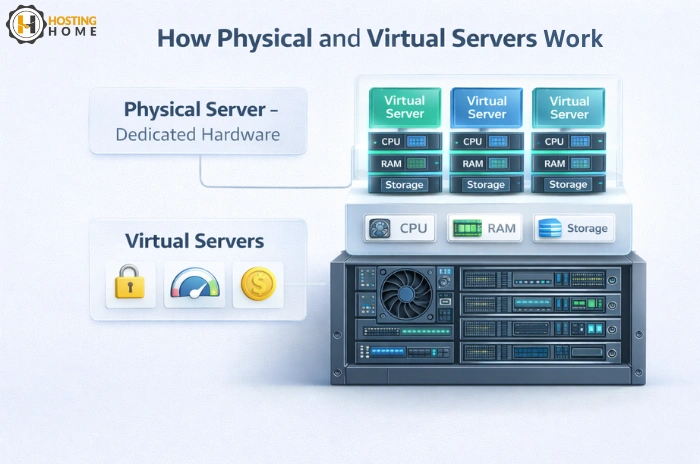
A virtual server is designed within a physical machine with the help of virtualization software. One physical server can have many virtual servers on it.
Each virtual server functions as a separate system, but it shares hardware with others. This makes virtual servers affordable and easier to manage.
When comparing physical and virtual server, the main difference is the way of sharing the resources.
Main Difference Between Physical and Virtual Server
Difference between physical and virtual server lies in ownership and performance.
A physical server gives:
- Dedicated hardware
- Full control
- Better stability
- Higher performance
A virtual server provides:
- Shared resources
- Lower cost
- Easy upgrades
- Faster setup
This is why physical vs virtual server is the most common comparison among users before choosing.
How to Check If a Server is Physical or Virtual
Some users want to know how to check if a server is physical or virtual. You can do this by:
- Checking system details
- Taking a look at virtualization tools
- Asking your hosting provider
- Reviewing information on the control panel
Most providers are very clear about specifying whether you are using a physical or virtual server.
Differences between Setup and Configuration
A physical server set up is more time consuming due to the manual installation and setup of hardware.
It includes:
- Hardware installation
- Network setup
- Installation of operating system
- Security setup
Proper physical server configuration is important for good performance.
Virtual servers, on the other hand, are ready in minutes.
Backup and Data Safety
Data protection is important for both types of servers. With physical servers, companies typically configure manual backups.
A good physical server backup plan includes:
- Regular backups
- Off-site storage
- Encrypted data
- Quick recovery
Automatic backups are often part of virtual servers.
Cost and Budget Comparison
Price is a major factor in server selection.
The physical server price is higher because you pay for complete hardware. It is suitable for big business.
Virtual servers are cheaper and are suitable for small businesses.
Before you buy physical server, always compare features and costs in the long term.
When Should You Choose a Physical Server?
A physical server is best for you if you need:
- High security
- Heavy workload handling
- Full hardware access
- Custom software setup
- Stable to perform over the long term
Many companies want to use physical server hosting for enterprise projects.
If you are looking to buy a physical server for business growth, it is a smart move as a long-term investment.
When Is a Virtual Server Better?
A virtual server is better if you need:
- Low budget hosting
- Quick deployment
- Flexible upgrades
- Testing environments
- Small websites
For start-ups, a virtual server often is the first step before an upgrade.
Choosing Between Physical Or Virtual Server
When choosing between physical server or virtual server, consider:
- Your budget
- Website traffic
- Data sensitivity
- Technical skills
- Growth plans
Some business even use both servers, physical and virtual servers together for better speed and uptime.
Why Choose Hosting Home for Physical Server Hosting
If you are planning to buy physical server or upgrade your servers then Hosting Home is trusted provider in India.
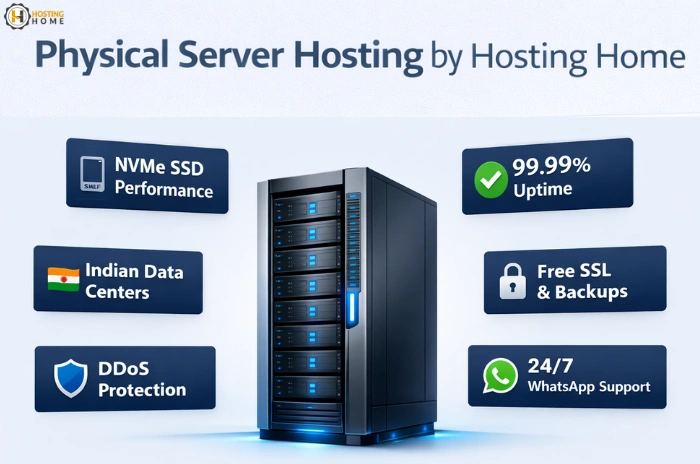
What Hosting Home Provides:
- High-speed physical servers
- Latest Hardware with NVMe SSD
- Customized server configuration
- Free SSL certificates
- Free weekly backups
- Free DDoS protection
- Free website migration
- 99.99% uptime guarantee
- Free 24/7 Dedicated WhatsApp support
- Secure Indian data centers
- Affordable pricing plans
If you want physical server buy options for enterprise use, or need the support of an expert, Hosting Home provides a secure and affordable solution.
Build your digital infrastructure with Hosting Home and enjoy powerful, secure and stable physical server hosting.