

Flask vs Django: What’s Best for Your Python Hosting
When you are Forced to develop a web application or website using Python, two names come to the mind — Django and Flask. Both are very famous frameworks, both are too powerful, and both are used by developers globally. But if you are going to opt for Python hosting for your project, then comes the question: Which one is best — Django or Flask?
To answer this, let’s break it down in simple words. We’ll look at what Flask and Django are, how they are different, and which one might be the right choice for your project.
What is Django?
Django is so vast a collection of tools used in developing web applications. It comes pre-installed with nearly everything that you might require — user login system, admin panel, database connectivity, security features, and much more. That’s where it’s called a “batteries-included” framework.
If you’re developing something of large and want numerous features, Django makes it simpler for you as it won’t let you start from scratch for everything.
Key Features of Django:
- In-built administrator interface
- Pre-configured user login (signup)
- Easy to deal with databases
- Strong security features
- Best for large projects
What is Flask?
Flask is so small yet adjustable toolkit. It does not have too many things already fixed up. It really provides you with the choice of selecting what you want to include.
For instance, if you need a database or login feature, then you will have to do it yourself using additional libraries. It is more manageable for developers but is more effort.
Most important features of Flask:
- Lightweight and easy to learn
- Flexible and easy to modify
- Ideal for small to mid-size projects
- Developers use tools when necessary
- Quicker to get started quickly
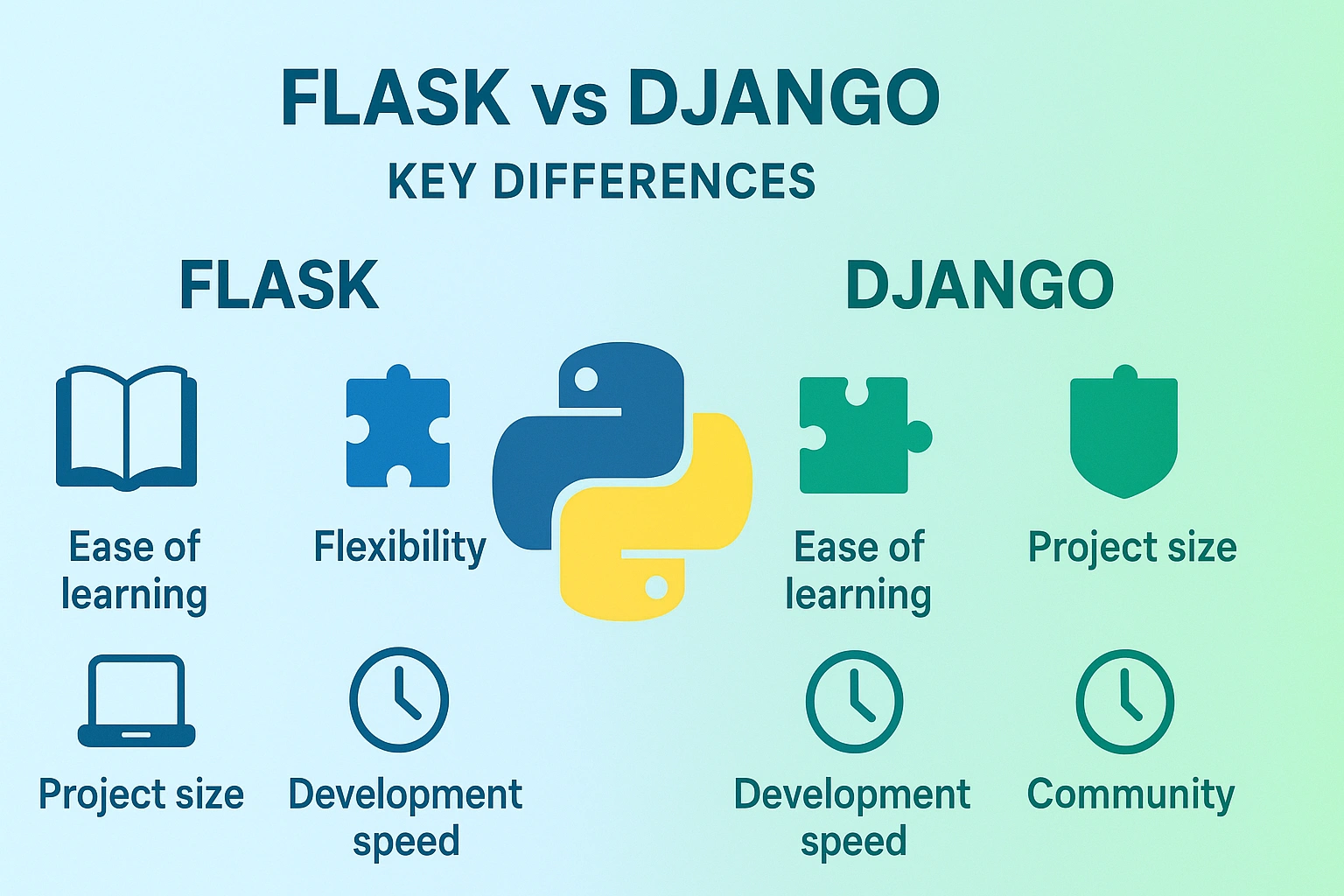
Flask vs Django: The Key Differences
Now, let’s compare Flask and Django in some of the key areas:
1. Ease of Learning
Flask: Extremely easy to learn for beginners. You can do with just a few lines of code. Ideal for learning the basic web development things.
Django: A bit more challenging initially because it is full of pre-existing features. But once you grasp it, extremely easy to develop large projects.
2. Flexibility
Flask: Provides total flexibility. You can structure your app as you wish. Ideal if you enjoy experimenting.
Django: More rigid. You must Follow to its work process. Ideal for big teams to maintain things organized.
3. Project Size
Flask: Ideal for small projects, startups, or personal apps. e.g., blog, portfolio site, or a small API.
Django: Ideal for big, complex projects such as e-commerce sites, social networking websites, or enterprise applications.
4. Development Speed
Flask: Simple to begin small projects but will consume more time when the project is large, as you’ll have to incorporate additional tools on your own.
Django: Quicker when it comes to big projects because all the tools are pre-installed, and you’ll get enough time to work on it.
5. Support and Community
Both Flask and Django are Cooperative. Django is more mature, so there are more tutorials, plugins, and pre-built tools available to use. Flask has good support as well, particularly for people who require flexible solutions.
Which is Better for Python Hosting?
When you host Python, the framework you use matters since it will determine the hosting setup, performance, and future growth of your project.
Use Flask if:
- You’re creating something small, simple, or experimental. Flask is light, so it will run on most any Python hosting. If you’re new, Flask is a good starting point.
Use Django if:
- You are constructing something large that requires a lot of features. Django is best for hosting which supports scalability, security, and databases. If you design your project to handle more users and scale in the future, Django is the better choice.
Real-World Examples
Flask: Used by Pinterest (in its early days) and Reddit (for some services). Flask is popular among most startups as it is easy to begin and scale.
Django: Used by Instagram, YouTube, and Spotify. These are large applications with the need for robust structure and scalability.
Advantages and Disadvantages of Each
Flask Advantages:
- Easy to learn
- Flexible and adaptable
- Perfect for small projects
Flask Disadvantages:
- More work for large projects
- Fewer features integrated
Django Advantages:
- Comes with many tools
- Perfect for large projects
- High security and reliability
Django Disadvantages:
- Harder for beginners
- Less flexible
Final Thoughts
So, Flask vs Django — what’s best?
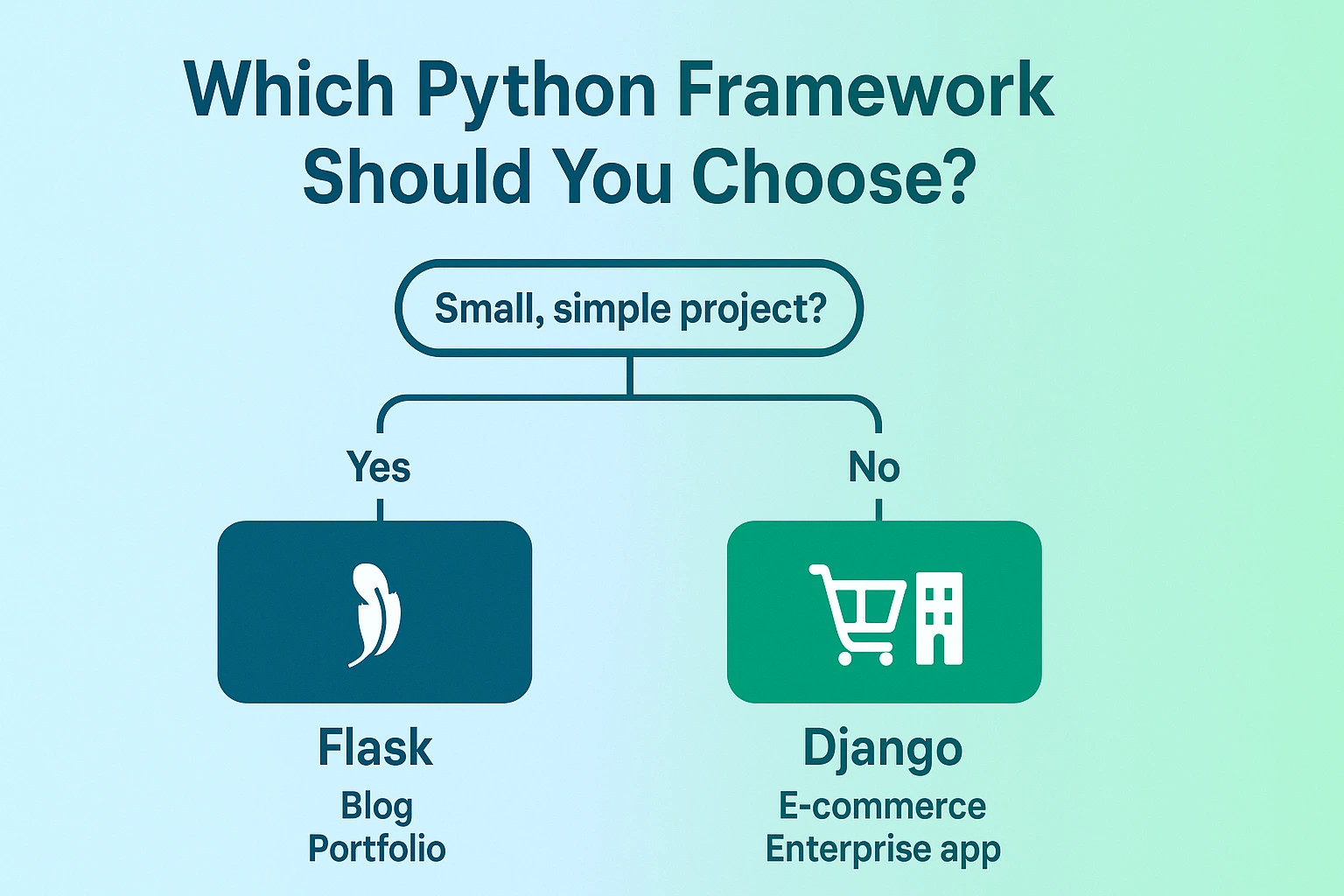
It all depends on what you’re going to build. If it’s your first time using Python hosting or you need a small project, Flask will be a good start. It’s light, versatile, and requires least skills. But if you have an extensive project with enormous functionality, Django will guide you through it effortlessly and without much time employing its ready-made tools.
In Short
- Small and simple projects → Use Flask
- Large and complex projects → Use Django
Either one of these, both Flask and Django are two great frameworks that render hosting Python strong and reliable.